1. The Oral Microbiome
The human mouth is an intricate ecosystem, second only to the gut in microbial diversity. Every surface—the teeth, the tongue, the cheeks—is covered in a biological film. When we talk about "oral care," we are actually talking about Microbiome Management.
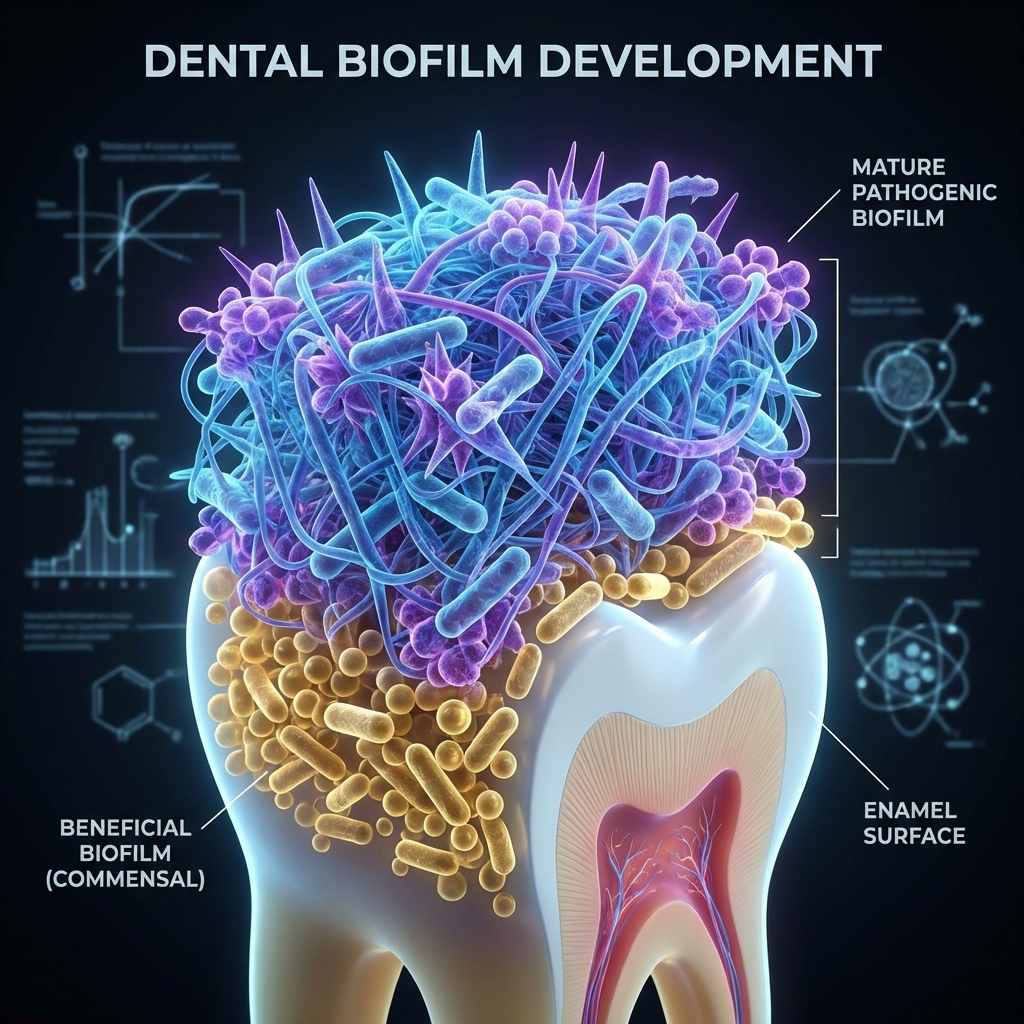
Figure 1.1: The maturation of dental biofilm from beneficial commensal bacteria to pathogenic clusters.
Not all bacteria are bad. In a healthy mouth, "commensal" bacteria work in harmony with your immune system to prevent infection. However, when we consume high-carbohydrate diets or experience prolonged dry mouth, we select for "acidogenic" bacteria like Streptococcus mutans. These bacteria thrive in acidic environments and are the primary drivers of tooth decay.
Biofilm maturation is a 24-hour cycle. Within hours of brushing, a protein layer called the "pellicle" forms, allowing early colonizers to attach. If left undisturbed, these form complex towers of bacteria that eventually become resistant to simple rinsing—this is why mechanical brushing is non-negotiable.
2. Gum Disease: The Silent Destroyer
Periodontal disease is often called a "silent" disease because it rarely causes pain until the final stages. It begins with Gingivitis, an inflammatory response to plaque accumulation at the gum line. If the body's immune system cannot clear the bacteria, the inflammation becomes chronic, leading to Periodontitis.
The Systemic Link
Recent studies in 2025 confirm that P. gingivalis (a key gum pathogen) can cross the blood-brain barrier. Chronic oral inflammation is now linked to increased risks of cardiovascular disease, diabetes complications, and even cognitive decline.
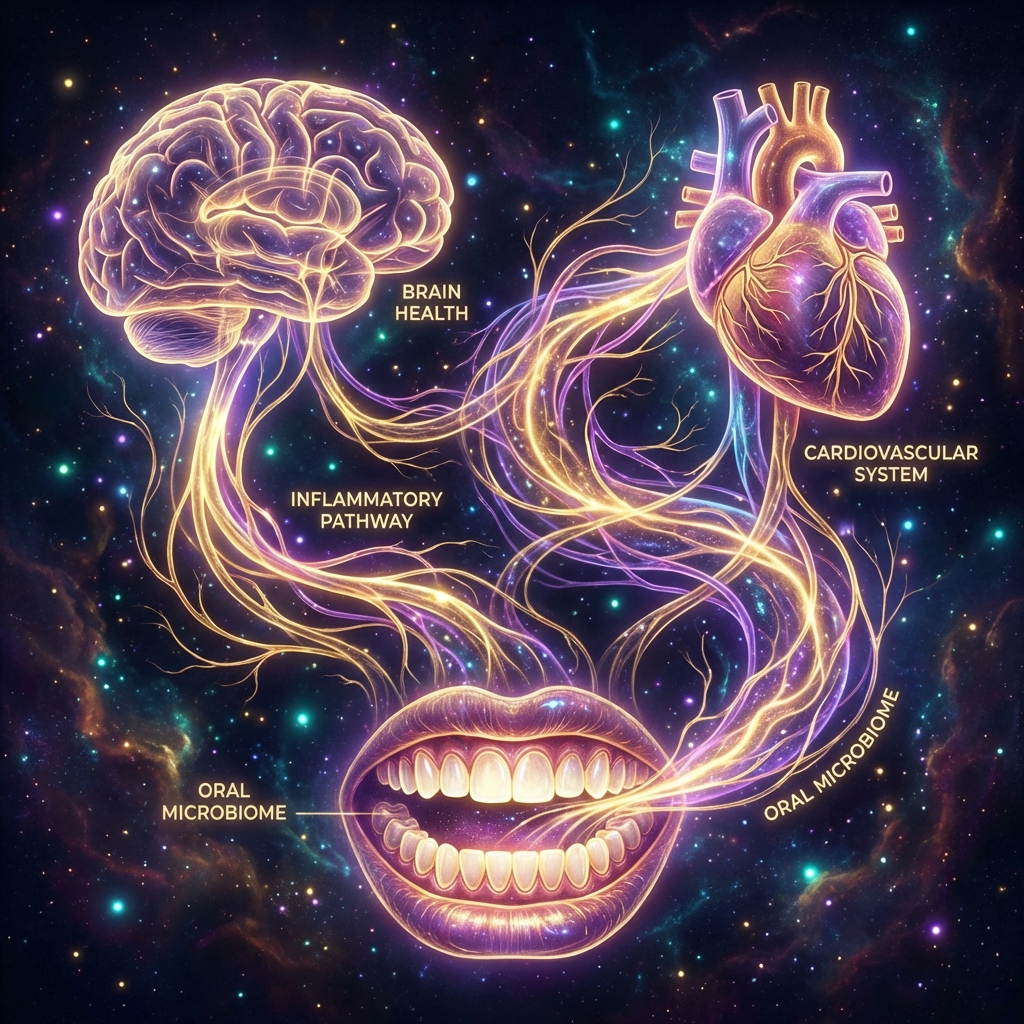
In periodontitis, the "pockets" between the tooth and gum deepen. The body's immune cells, in an attempt to fight the infection, release enzymes that inadvertently destroy the bone supporting the teeth. This process is irreversible without professional intervention like Scaling and Root Planing (SRP) or specialized laser therapy.
3. The Chemistry of Cavities
Cavities are not just "holes." They are the result of a continuous chemical tug-of-war. Your teeth are constantly in a state of Demineralization and Remineralization.
Every time you eat, the pH in your mouth drops. When it falls below the "critical pH" of 5.5, the hydroxyapatite crystals that make up your enamel begin to dissolve into your saliva. This is demineralization. Fortunately, your saliva is rich in calcium and phosphate, which can flow back into the tooth surface once the pH rises above 5.5—this is remineralization.
The problem arises when the "acid attacks" are too frequent or the minerals available in saliva are insufficient. Over time, the microscopic dissolution of enamel leads to a structural collapse—a cavity.
4. The 6-Point Professional Protocol
01. Mechanical Removal
Brushing and flossing remain the gold standard. Electric toothbrushes with pressure sensors are recommended to avoid "Abrasion" and gum recession.
02. Chemical Assistance
Nano-hydroxyapatite and fluoride toothpastes help "plug" the microscopic holes in your enamel before they become full-blown cavities.
03. Salivary Stimulation
Dry mouth (Xerostomia) is a leading cause of tooth loss. Chewing xylitol-based products can increase saliva flow by up to 10x, neutralizing acids naturally.
04. pH Neutralization
Rinsing with water or an alkaline mouthwash after eating acidic foods helps return the mouth to a neutral pH of 7.0 much faster.
05. Professional Intervention
Regular cleanings remove "tartar" (calcified plaque) that is physically impossible to remove with a toothbrush once it has matured.
06. Microbiome Seeding
Oral probiotics are an emerging trend, helping to "crowd out" pathogenic bacteria with beneficial strains like S. salivarius K12.
5. Nutrition & Lifestyle
What you eat is just as important as how you brush. A diet high in Vitamin C supports gum tissue health, while Calcium and Vitamin D are essential for maintaining bone density around tooth sockets.
- Limit "Snacking Frequency": Every snack is an acid attack. Constant grazing prevents remineralization.
- Hydration: Water is the primary component of saliva. Low hydration leads to low pH.
- The "Apple" Effect: Fibrous fruits can help mechanically scrub tooth surfaces, though they are not a replacement for brushing.

6. Advanced FAQ
Should I use mouthwash before or after brushing?
If your mouthwash contains fluoride or N-Ha, using it after brushing and not rinsing with water afterwards allows the minerals to sit on the teeth for longer.
Is alcohol-based mouthwash bad?
Alcohol is a desiccant (it dries things out). Long-term use of high-alcohol rinses can lead to dry mouth, which ironically increases the risk of cavities and bad breath.
Why do my teeth feel sensitive after whitening?
Whitening agents open the "dentinal tubules"—microscopic pores in your teeth. Using LaserTen products can help occlude (plug) these pores to reduce sensitivity.
⭐ The Golden Rule: Time vs. Frequency
It isn't just how much sugar you eat, but how often. Eating a whole bag of candy in 10 minutes is actually better for your teeth than eating one piece every hour for 5 hours. Why? Because the "acid attack" only lasts 20 minutes. Frequency causes constant damage; speed allows for recovery.